Mar 11, 2023

A superb view of the islands of Fiji (Viti Levu) at 8:40am FJT today from the @Space_Station 428km above

https://twitter.com/ISSAboveYou/status/1633935876597358592

Feb 18, 2023

Fiji Spartan Trifecta Week presented by Fiji Airways


SPARTAN’S IN FIJI
 
Exciting News! 

Spartan Race Australia, NZ & Fiji has launched Spartan Fiji today which will be held from 9 - 12 November 2023 in Sabeto, Nadi. 


Spartan are expecting between 2000-3000 participants to travel for the race, with many travelling in family or friendship groups.


THE RACES

Bula!

At Aviva Racecourse, also known as Sabeto Racetrack, racers will experience one of the most scenic, but challenging Spartan courses ever, as we access the steep Sabeto Mountain Track and the multiple surrounding trails. 

You will traverse through a number of traditional Fijian native villages, rain forest areas and tough and rugged mountain tracks. 

Your climbing will be rewarded with breath-taking views from the peak of the Sleeping Giants.

We're bringing you the greatest Spartan destination event ever held – with the support of the Fiji Government and Fiji Airways, the ingredients are now in place for an epic experience in one of the world’s most idyllic locations.

Run as a Team
By registering multiple racers on the order, you can save up to 15% on race fees. The more racers you register, the higher your discount. Find out more!

Feb 9, 2023

Discovering Viti Levu: our family trip to Fiji By Chris West

By Chris West
Senior Travel Consultant at Travel Nation

So many tourists visit the beaches and islands of Fiji without diving into the local culture on the mainland. This is such a shame because the Fijian way of life is fascinating.

As a family, we set out to explore Viti Levu, Fiji’s mainland, and learn about life in the rural villages. It became one of the highlights of our round the world trip. If you have time, don’t forget the mainland – you’ll find a welcoming and beautiful world packed with wonderful people.


Travelling through rural Fiji

We had 10 days to explore Viti Levu, the largest island in Fiji, and it felt like a real adventure from the get-go. After arriving at the airport, we started with a 3-hour car transfer along bumpy, dusty dirt tracks climbing into the interior mountains and rainforest. We were mesmerised by the fabulous scenery as we drove along the central ridge.

We made this trip with our local guide, Jake, as visitors are not allowed into Nabutautau traditional village alone. Due to COVID, we were the first guests to the village in 20 months and, to be honest, we weren’t sure what to expect. However, what followed over the next couple of days was a brilliant, memorable experience. Our time on Viti Levu became a real highlight of our five-month trip.


Arriving at Nabutautau traditional village

When we arrived at the village, we presented the chief with a traditional gift of SevuSevu (the vegetable that Kava is made from) and took part in a Kava ceremony. Kava is Fiji’s national drink and it holds a very special place in Fijian culture. Sharing kava is a way of establishing a bond and welcoming visitors to traditional villages.

In the village, we stayed in a traditional bure with thin mattresses on the floor of our thatched room. We had lovely cushioning made of soft dried grasses and floor mats made of woven banana leaves – this was proper Fiji style. Up in the mountains, the temperature dropped dramatically during the night and we were needing extra layers on our coldest night in 10 weeks.


Exploring Fiji’s wild interior

The following day, we headed off on a 6-mile very steep and hilly circular hike with Jake and the village second in command, Mr Rocco. This included riding a very fun natural rock waterslide into freezing water and crossing the Sigatoka river twice (Fiji's longest river).

After some swimming and a bite for lunch, we explored some old village remains, including human bones, at an ancient burial site. Finally, we scrambled up a steep slope to return to the village. Our girls, aged 6 and 7, did great on such a strenuous, hot hike. We felt very proud of them both!

Learning about local history

Back at Nabutautau, we learnt a little history of the village, infamous for an incident in 1873 when Reverend Thomas Baker, and his British missionary helpers, were killed and eaten by the chief - even his sandals! This was one of the last known acts of cannibalism in Fiji, which was practised until the mid-19th century.

Today, the village is hugely inviting and welcoming. We felt like members of the family and the local children played really well with our kids, which was lovely to see. We were all very sad to say goodbye, but it was to time for us to head back to the coast.


Staying at RakiRaki

After another very bumpy dirt track journey, dropping off Jake along the way, we headed to RakiRaki, up in the northeast corner of Viti Levu. Here, we stayed at a homestay along with a local family and a mixture of their children, nieces, and nephews.

After another Kava ceremony with the village chief, we were again welcomed into the fold like old friends. Everywhere you go in Fiji, the spirit of hospitality is out of this world.

We had a brilliant day fishing and snorkelling at RakiRaki. Some of our host family’s children joined us and, fortunately, the older one caught several fish by a spear for lunch. Next, we headed to a deserted island to cook the fish on a bonfire and enjoy a little more snorkelling and swimming. 

It was a fabulous day out and another very memorable experience. In the afternoon we spent more time with local villagers and chatted with fellow travellers at the homestay. After dinner, there was even a dance show from the local kids.

Visiting Wailotua Cave

Leaving RakiRaki, we headed south, stopping at Wailotua cave. A local guide took us through the huge cave, where the village ancestors lived over 100 years ago. We saw an amazing stalactite known as the 6-headed snake, as well as an area where they kept prisoners in jail (basically, in a hole), and where they were killed and eaten. We also visited a strange marriage ritual site and a large cavern where village meetings used to happen.


Staying at a rainforest lodge

Driving further south, we spent one night in Colo-i-Suva Forest Park at a lakeside rainforest lodge. We hiked through the forest on a beautiful 3-mile loop next to a river, that passed waterfalls and natural pools. Along the way, we spotted tropical wildlife including fish, dragonflies, butterflies, and parrots.

Relaxing on the Coral Coast

We spent our final 3 nights at the Beach House on the Coral Coast in the south of the island. This involved our first public bus journey of the trip, and we were the only Westerners on a packed bus from the capital Suva.

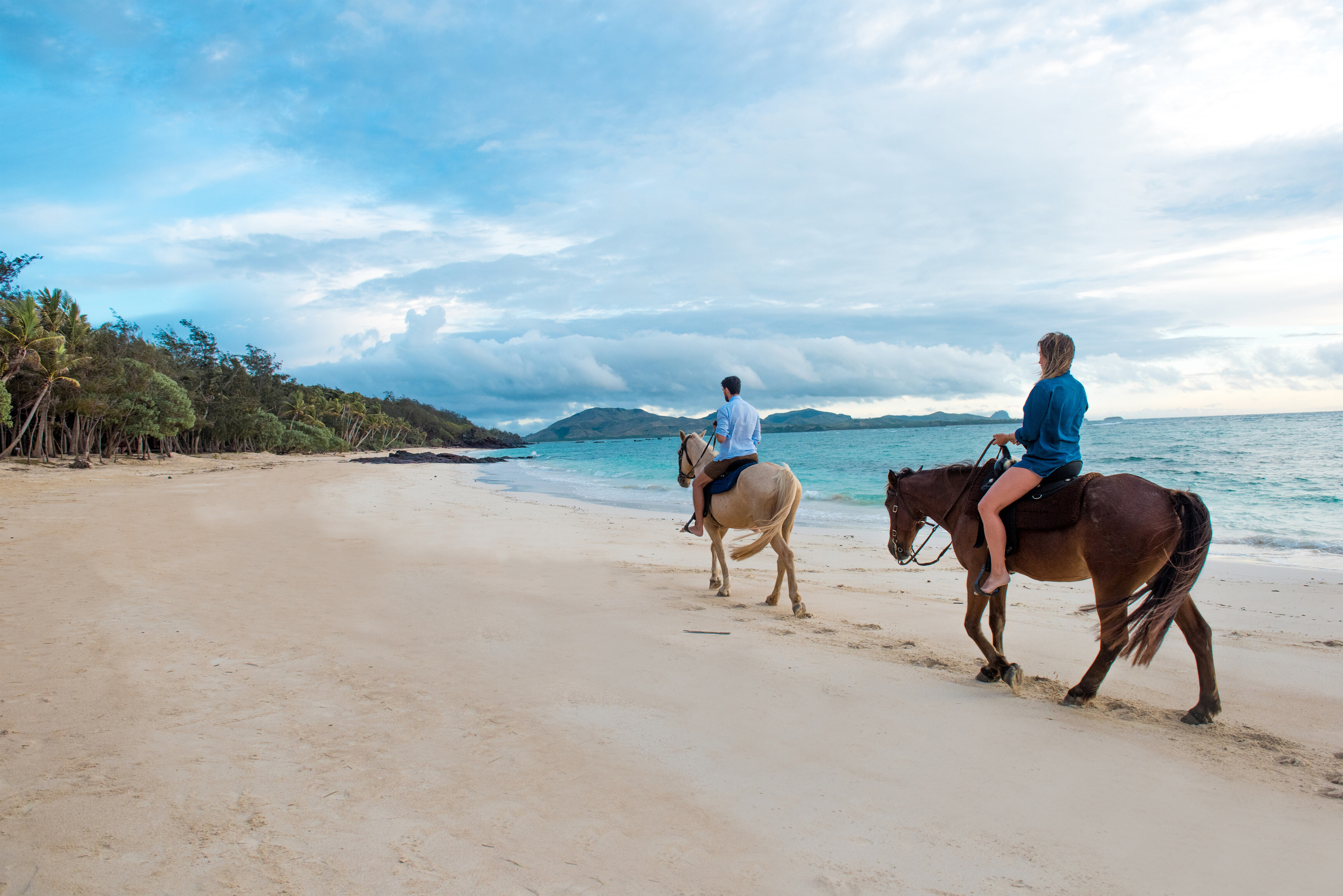
The hotel had a very chilled-out, laid-back vibe with a relaxed mixture of young travellers and families that don’t want a ‘big resort feel’. We did some kayaking, snorkelling, and horse riding along the beach, as well as playing in the pool with friends.

Diving with sharks – and no cage!

On our penultimate day, I headed off on my own for an early 40th birthday present, advertised as the greatest shark dive in the world. At Pacific Harbour, I checked in to Beqa Adventure Divers for the most memorable dive EVER. Along with my fellow divers, I boarded the boat and headed out to the dive site. I won’t lie, I was a little nervous.


After a 25-minute boat journey, we jumped in the water and, with 30-metre visibility, we could immediately see our first sharks below. We descended to 30 metres and then sat behind an old coral wall facing 'The Arena'. This is where we saw more than 50 sharks, mainly bull sharks (about 3m big) but also lemon sharks, nurse sharks, whitetip sharks, blacktip sharks and silvertip reef sharks.

We had about 7 staff with us feeding the sharks tuna heads out of a dustbin and holding metal poking sticks to keep the sharks away from us. This was all without a cage! Considering that bull sharks kill most humans worldwide, primarily from being able to go in freshwater and up rivers, this was a truly amazing experience. We were so close to them and strangely, it all felt very calm and gentle. I almost wanted to reach out and touch them.

Unbelievably, on our second dive, we got even closer to the sharks. This time we practically had to lie on the ocean floor. Many of these bull sharks were over 3 metres long and, at one point, I was even slapped around the head by a tail! It’s not every day you get to say that you were slapped by a shark!

The experience was truly incredible and oddly I felt very safe, calm, serene and almost peaceful. You could just be in awe as they swam gracefully through the water, occasionally showing their brutal power when needed. As we ascended, we stopped at 10 metres and then 4 metres, where we saw more reef sharks and moray eels on the coral reef.


Seeing both sides of Fiji

Everywhere we went on Viti Levu, the people were friendly, the scenery was gorgeous and there was so much to do. On the coast, you’ll find all the classic water-based activities like snorkelling, kayaking, paddle boarding, fishing and diving. The water visibility is wonderful, with great reefs and marine life. Inland, you'll find beautiful forest hikes with waterfalls and natural pools.

I most definitely recommend heading for some of the lesser-visited areas on Viti Levu as well as Fiji’s famous tropical islands. If you experience village homestays and inland hikes on Viti Levu, you’ll see so much more of Fiji’s personality and appreciate the country even more.

Overall, Fiji was truly amazing, and it has jumped very high into our list of favourite countries. After exploring the mainland, we set off to sail between the dreamy Yasawa Islands and we felt that this was the perfect combination. I would advise anyone travelling to Fiji to spend some time on the mainland as well as the islands. This will really allow you to see both sides of Fiji, and they are equally brilliant in contrasting ways.

Ready to explore Fiji?

We’re South Pacific experts and we’ll help you discover the real Fiji. We can put together Fiji holidays of all shapes and sizes, whether you’re jetting off on your honeymoon or planning a family holiday. Simply get in touch with us on +44 1273320580 or send us a quote request by email, and we’ll get to work.

About the author Chris West

Senior Travel Consultant

With his studies in Geography and Master’s degree in development behind him, Chris set off to leave pretty much no mountain unclimbed. His passion for adventure has driven him to climb both Kilimanjaro and Annapurna Base Camp in Nepal and he and his wife have also traversed Canada and all the way down through the Americas by bike! Even starting a family didn’t really slow down Team West, as they took their little daughter on a campervan road trip through the US National Parks. Chris joined Travel Nation as a round the world specialist in 2011 and is also one of our Business Class consultants. He really enjoys helping other families put together trips they’ll never forget.

https://www.travelnation.co.uk/blog/discovering-viti-levu-our-family-trip-to-fiji


Dec 1, 2022

Food of the Earth

The evolution of food has always had a direct and significant correlation to the advancement of humans.

 The way people consumed and cooked their food has been indicative of the changing times and evolving societies. 


Crude stone toils were fashioned by prehistoric cavemen to hunt and kill their food, and the all-important discovery of fire would change the way people eat food. 

How the early humans discovered fire and created the first barbecue is a story only we can hypothesise, but one thing is for sure, the shift to a cooked diet was a pivotal point in human history. 

From tools and fire, to the formation of civilisations and colonies, the story of fore continued to be tied to the structures of people and society. Food started being classified according to hierarchy or its consumers, food for the chief, food for warriors, royal cuisine, and poor man, fore. 


In the Pacific, this evolitionary tale of our sustenance evokes a common thread through subterranean fore pits. Pacific Islanders we and journeyed across the oceans as communities. 

Once they put down roots on an island, they created their villages and communities around important food and water sources. 

They also brought with them on these long journeys, the knowledge of cooking fore under the ground. 

While earth ovens were used by many civilisations, they are still commonly found and practised in the To this day, throughout the Pacific, different island nations have their cwn versions of the earth oven. 

In Fiji we call it lovo In Rotuma it is a Iona. Tongan and Samoans call theirs umu.


https://www.pressreader.com/fiji/fiji-time/20221101/281921661956630/textview 

https://www.pressreader.com/fiji/fiji-time/20221101/page/41 

Nov 5, 2022

Back in history: Second largest ship built

 The Tui Tai, a ship which was 40m in length, was the second largest ship ever to be built in Fiji during the late 1970s.


She had seating capacity and other facilities to accompany more than three hundred day passengers.

She was built primarily to serve Beachcomber and Treasure Island resorts from Lautoka and the Coral Coast, but was also available for charter and other special trips within the Fiji group and to Rotuma.

Highlighted in The Fiji Times on December 17, 1980, the Tui Tai was believed to be one of the finest ships built by local boatbuilders.

To save fuel, for added propulsion and to give the vessel extra stability, safety and romantic appeal; the Tui Tai had been rigged as a stay-sail schooner, with three tall aluminium masts and 6000 square feet of sail.

The masts, were estimated to be higher than the top of Dominion House in Suva.

The masts had been manufactured by Yacht Spars of New Zealand, and was installed by a New Zealand team headed by Max Carter; a former manager of Millers boatyard in Suva. Mr Carter also designed the rigging.

The sails were from Hoods, New Zealand, and were ordered through David Lackie, of Suva.

The cloth was a special ultra-violet ray resistant synthetic and was the colour of a tropical sunset.

The diesel propulsion motors were of the famous English Gardner brand, regarded by many experts as the best and most economical in the world.

The auxiliary motors and alternators were GMS from Clyde Engineering, Suva.

All motors were of mounted and coupled for vibration-free silence, and the engines were freshwater cooled, using the twin bilge keels as heat exchangers.

Exhausts and mufflers were made of stainless steel, with water injection for coolness , fume and noise reduction.

The hydraulic steering gear was made by Wagner Engineering, of Canada. Engine controls to the wheelhouse were also hydraulic and are from Hydronic Corporation of US.

The New Zealand aid international firm of carboline helped with the supervising of the high quality painting called for in the specifications.

The wheelhouse was particularly well-equipped with navigational instruments and remote controls.

Aft of the wheelhouse is particularly a VIP lounge and the master’s cabin and bathroom.

Also on the top deck was a spacious and comfortable covered seating area and a large Rosawa-planked sun deck,· with provision for emergency or alternate steering right aft.

The principal seating area was on the main deck adjoining the bar, lounge and dance floor.

The seating was of restaurant style rather than the more common bus-type arrangement.

This made it easier for passengers to move about and get to know each other.

The bar was very well-equipped, having a 10 cubic meter (35 cubic feet) bottle cooler, pre-mix cordial carbonating machines, a draught beer dispenser, an ice-maker and a fruit and cocktail mixer-dispenser.

The cargo hatch, with boat stowage and a substantial electric anchor winch by EMF Australia and a derrick for handling cargo and boats, was also on this deck.

A particular special feature was the beautifully fitted Rosawa planking following the’ ship’s sheer.

On the lower deck were quarters and facilities for the crew, toilets and showers for passengers, freezer, galley and store, fire-fighting, flooding controls.

In front of the crew accommodation was an 80 tonne cargo hold.

Watertight bulkheads separated the chain locker and hold, as well as the crew accommodation with the engine room and steering flat.

The engine room was also exceptionally well-equipped. A large sewage-waste-sullage tank was fitted together with all the pumping systems required for such a vessel.

Special care had been taken to avoid any possibility of environment pollution.

The Tui Tai had double bottom tanks and was able carry 16,000 gallons of fresh water to service the Beachcomber and Treasure Island resorts.

The double bottoms were also an additional safety feature.

All tanks were arranged so that if empty, they could be filled with salt water to increase stability if the ship ever had to ride out a hurricane.

https://www.fijitimes.com/back-in-history-second-largest-ship-built/ 

Sep 28, 2022

UNWTO Tourism Stories Pacific - Fiji, Kasimiro Taukeinikoro

Kasimiro Taukeinikoro is the owner of Rivers Fiji (Upper Navua Conservation Area - UNCA). 

Before COVID-19, his team operated rafting activities three times a week in the UNCA with international tourists, but also multi-day camping and cultural trips and employing 18 local river guides and 3 office staff.

After COVID-19 hit, business as usual stopped due to the closing of borders. 

Kasimiro shifted his business model to domestic tourism and reduced his activities prices to 75% the usual costs to keep paying his guides (no benefit for the company), helped the efforts of the Ministry of Health to carry the vaccines on a volunteering basis to remotely located communities difficult to access (through the Duavata Collective), consistently supported the conservation efforts of the UNCA, notably via the EcoChallenge races involving young people of the communities.


Find all the stories 📰 https://bit.ly/3pAmSIP 

Aug 28, 2022

Marine Rescue Ambulance Update - August 2022

 Bula vinaka,

Hope this finds you well and in good spirits.


Further to our recent opening of our 600 square meter Emergency Medical Services Medic Centre facility located at level 1. Port Denarau Marina as mentioned over the past weeks please find the latest update on our Marine Rescue Ambulance.


Emergency Medical Services (Fiji) has just received delivery of its new purpose built medevac rescue boat named;  ‘’EMS Marine Rescue’’


The vessel is an aluminium single hull 7.8 metre boat powered by twin 175 HP 4 stroke Suzuki Outboards engines.

Currently the vessel is at Port Denarau Marina having the engines fitted & undergoing the final stages of the MSAF survey requirements.

Marine Rescue will be based at Port Denarau and operate  24/7


The vessel installations include:


·         AIS Radar, Satellite phones & internet, GPS tracking, High powered day/night search lights, FLIR Thermal imaging Camera

·         An extensive emergency trauma medical kit - Enclosed Cabin On Board stretcher - room for 3 patients to lay down and be treated

·         The latest digital diagnostic equipment- Portable X-Ray, Ultrasound, ECG, AED, LifePak, Vitals Monitor, Onboard & portable medical oxygen

·         Advanced drugs including inotropes, antiarrhythmics, sedatives and, neuromuscular blockers

·         Musculoskeletal - complete range of immobilisation and spinal equipment

·         Marine surf rescue kit

The boat has it's own trailer that allows the boat to be mobilised to any location site in Fiji for conferences, events and film production sites.

 Marine Rescue’s medical team will consist of EMS’s  doctors, emergency nurses and paramedics. 

Patients will be treated on-site and those requiring emergency treatment or surgery will be stabilised then transferred to the appropriate medical facility. 

Please Call me 222 0909


Best regards,


Graeme Hedge

CEO – Paramedic

Helipro (Fiji) Pte Limited


Jun 24, 2022

Adventure Awaits in Fiji…for Everyone!

 Pristine waters, white sand beaches, and lush rainforests make up a perfect natural wonderland for a plethora of adventure activities. 

Whether your clients are traveling with friends, family, or solo, Fiji is one big playground for all ages and levels of adventure. From culturally immersive experiences to adrenaline-pumping activities and everything in between, there’s adventure to be found for all in Fiji.

From culturally immersive experiences to adrenaline-pumping activities and everything in between, there’s adventure to be found for all in Fiji.

Whether your client prefers soft adventure experiences like jet boating up a river and spending the afternoon with the locals in a traditional Fijian village, jet-skiing around the islands, or snorkeling from dawn to dusk, to the more thrilling adventures like shark diving, surfing Cloudbreak, or white-water rafting (or perhaps a happy a mix of everything!), you’ll be able to make it happen for them in Fiji.

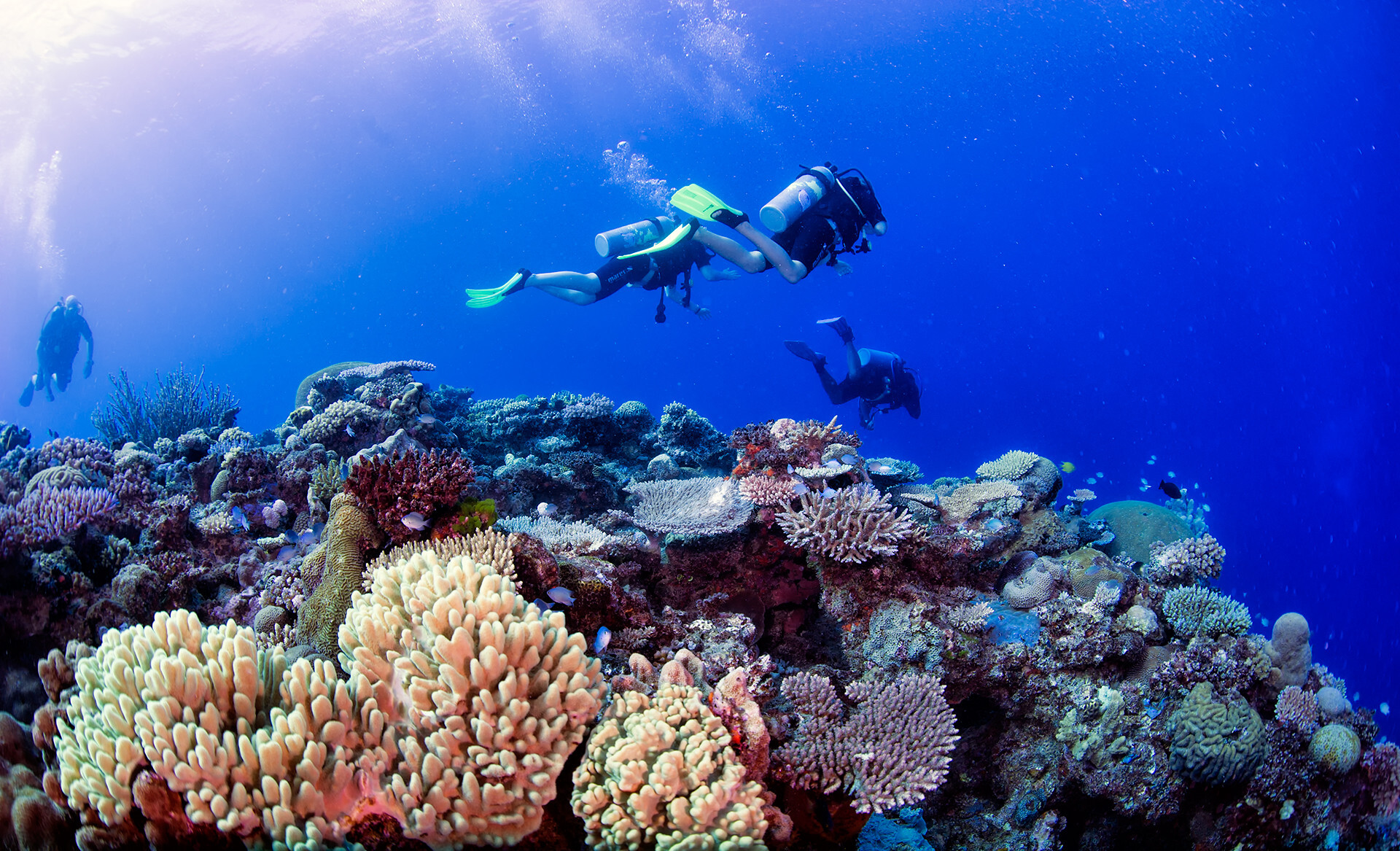
As an island destination, Fiji is of course known for its water-based activities. Take your pick from stand-up paddling and floating on a billibilli to river tubing and kayaking. If your clients are scuba certified, Fiji has incredible world-renowned sites like the Rainbow Reef, Namena Marine Park and the Bligh Waters, however, Fiji is also a dream destination for those looking to get certifited. It’s known as the “Soft Coral Capital of the World” and Fiji’s underwater beauty will be sure to mesmerize divers of all levels.

Divers exploring a coral reef, Yasawa Islands. Fiji’s underwater beauty will be sure to mesmerize divers of all levels.

If land adventure is preferred, try one of Fiji’s many hikes. No matter where you are in Fiji, you can always spot a hill or mountain in the distance just waiting to be explored. Hike through lush rainforests or walk through the highlands for seriously jaw dropping views. For those looking to get off the beaten path, head out on a multi-day hiking excursion with Talanoa Treks who will take you through Fiji’s remote interior. Explore muddy tracks on a 4wD quad bike with Go Dirty Tours or zip through forest canopies with Zipline Fiji. No matter the experience, plan accordingly so that your client can cool off in one of the country’s many majestic waterfalls.

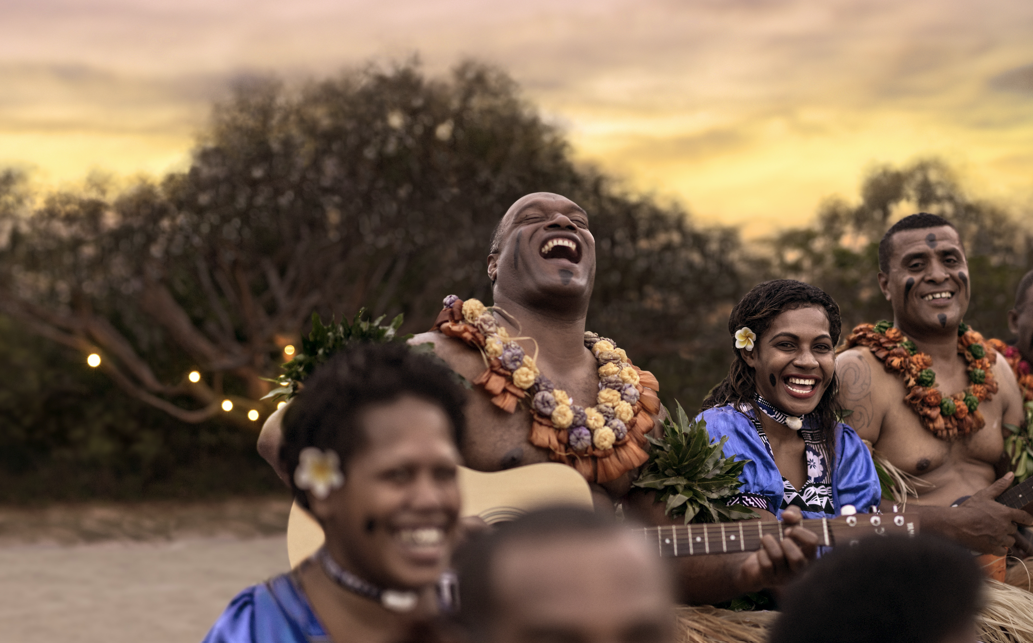
Get to know the locals and experience Fijian customs through cultural-based activities. Visiting a local village is a unique way to learn more about Fiji’s rich culture and further engage with its warm people. Engage in a traditional kava ceremony and indulge in an authentic lovo dinner. From mild to wild, Fiji promises to thrill!

Visiting a local village is a unique way to learn more about Fiji’s rich culture and further engage with its warm people.

If you’re looking to strengthen your Fiji knowledge so that you can better sell Fiji to your clients, Tourism Fiji recently launched a brand new Matai Specialist Program. The new program is more user-friendly with upgrades including a three-tiered interactive course (Bronze, Silver & Gold), a Knowledge Center to ask (or answer) your Fiji planning questions, and a Resource Center that has useful printables to include in your client documents. To register and learn more go to: https://specialist.fiji.travel/.

For general travel information about Fiji please visit: https://www.fiji.travel/

Tourism Fiji is the Fijian government’s tourism marketing arm and is responsible for promoting Fiji as a visitor destination around the world. The tourism industry contributes significantly to Fiji’s economy as the country’s largest foreign exchange earner. Located in the heart of the South Pacific, Fiji is comprised of 333 tropical islands due north of New Zealand and east of Australia. While known for its luxurious private islands, all-inclusive resorts, pristine environments, culinary delights, and outdoor adventures, Fiji is most widely celebrated for its culture and unique “Bula” spirit. Fiji is easily accessible through direct 10-hour flights from Los Angeles and San Francisco or 6 hours from Honolulu via Fiji Airways.

https://www.adventuretravelnews.com/adventure-awaits-in-fiji-for-everyone

May 27, 2014

Fiji Airways and Matava Resort Join to Promote the Newly Branded Fiji Link

To celebrate the re-branding of Pacific Sun to Fiji Link, Fiji Airways is giving everyone the chance to win a fantastic prize:
Win a return trip for two to Kadavu Island staying at Matava, Fiji’s Premier Eco Adventure Resort.
Prize includes domestic flights, 2 nights Resort accommodation in an Oceanview Bure, all meals and return Kadavu Island Airport – Resort boat transfers.

To Enter, simply visit the Fiji Airways  Promotion Page